Protein Powder for Women: Do You Need It, and How Do You Choose One?
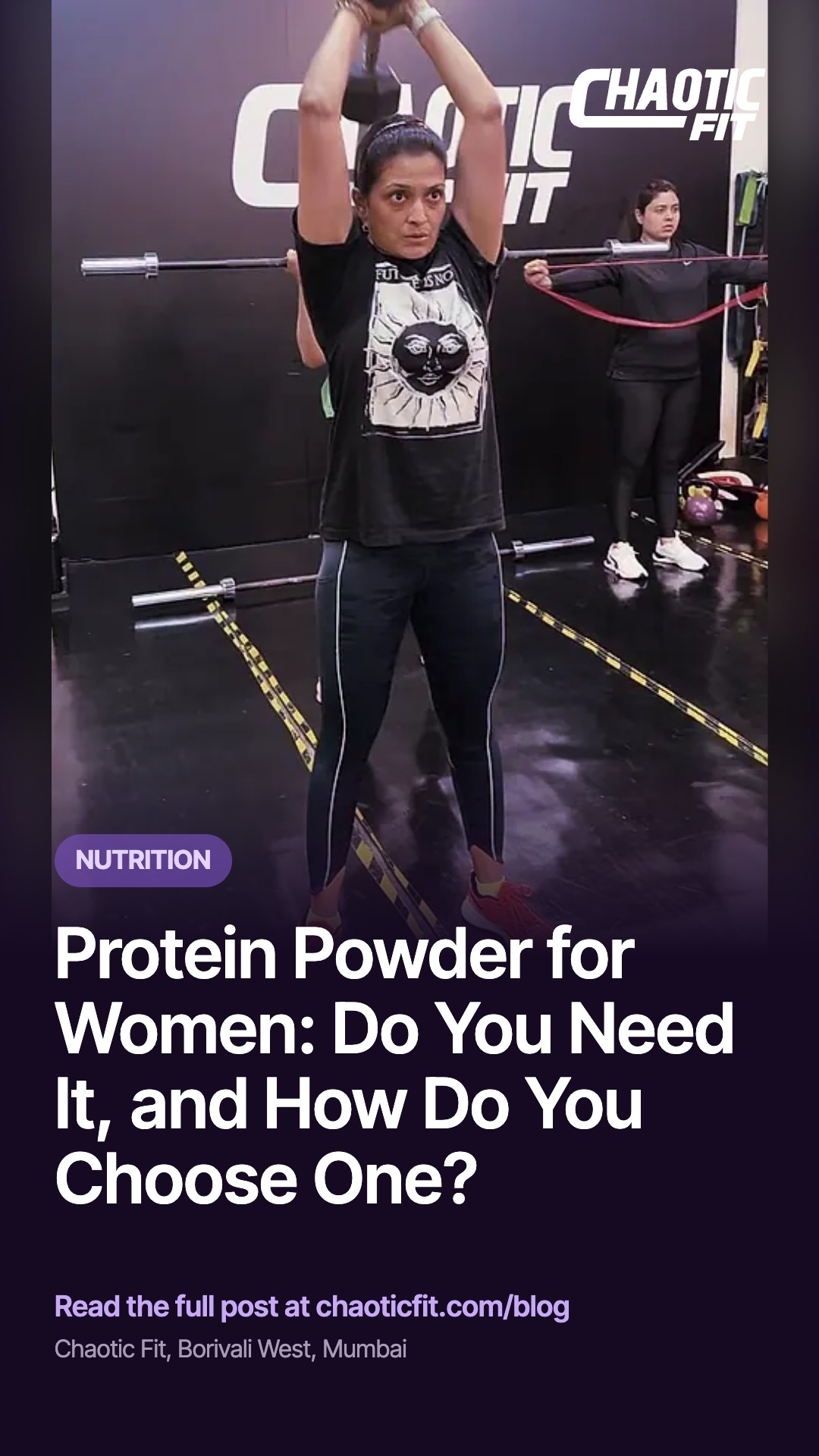
Most women who train do not need protein powder, but many find it a handy way to reach their daily target. Aim for about 1.2 to 1.6 g of protein per kg of bodyweight if you lift. Get most of it from food like paneer, curd, dal and soya. If you use a powder, pick one with independent lab testing and treat it as one serving of food. There is no special women's formula you need.

Do women need protein powder at all?
No. Protein powder is just protein, usually from milk (whey) or plants like soy and pea. Your body treats it like any other protein. India's 2024 dietary guidelines from ICMR-NIN advise against relying on protein powders for long periods and favour whole foods. We agree with food first. A powder makes sense when you train hard and struggle to eat enough protein, or when mornings are rushed.
How much protein do women need?
A 2016 joint position from American and Canadian sports dietitians gives 1.2 to 2.0 g per kg of bodyweight a day for active people. For most women who lift, 1.2 to 1.6 g covers it. Women over 40 may benefit from the higher end to hold on to muscle. See our guide to training after 40.
| Bodyweight | At 1.2 g per kg | At 1.6 g per kg |
|---|---|---|
| 50 kg | 60 g | 80 g |
| 60 kg | 72 g | 96 g |
| 70 kg | 84 g | 112 g |
Most of this can come from food. Our vegetarian protein list shows how much is in paneer, soya, curd and dal.
Will protein powder make you bulky?
No. Building visible muscle takes months of hard lifting and enough total food. A scoop of protein cannot do that on its own. Read will lifting weights make women bulky? for the full answer.
Does protein powder help with weight loss?
It can help indirectly. Protein tends to keep you fuller than the same calories from carbs or fat, and it helps you keep muscle while you eat a little less. But a shake added on top of your normal meals adds calories. Use it to replace a low-protein snack, not as an extra. Our vegetarian weight loss diet plan shows where it fits.
Try it
Do you need a protein powder?
Tick what is true for you.
How do you choose a good protein powder?
- Look for independent testing. A 2024 study in the journal Medicine tested 36 protein supplements sold in India. 25 of them held less protein than their labels claimed. The study was small and self-funded, and some brands disputed it, but the lesson stands: a third-party test report is worth more than a famous face on the tub.
- Check the protein per scoop. Many powders give about 20 to 25 g per scoop. Compare grams of protein, not scoop size.
- Keep the label short. Avoid added herbs, fat burners and long blends.
- Pick a source you tolerate. Whey comes from milk, so it suits vegetarians who eat dairy. Soy and pea suit people who avoid dairy.
When should you take it?
Any time that helps you hit your daily total. After training is convenient, but total protein across the day matters more than timing. See what to eat around a morning session. If you also want creatine, read creatine for women.
Who should check with a doctor first?
If you are pregnant, breastfeeding, have kidney or liver disease or take regular medicine, check with your doctor before adding a protein supplement. The same goes for anyone with a milk allergy. Our nutrition builder plans meals around food, and our group sessions give you the training that protein supports.
Quick answers
Is protein powder good for women?
It is safe for most healthy women as a top-up. It is not needed if you already eat enough protein from food.
How much protein powder should a woman take a day?
Usually one scoop, often about 20 to 25 g of protein, is enough to fill a gap. Get the rest from meals.
Which protein powder is best for vegetarian women?
Whey suits vegetarians who eat dairy. Soy or pea suit those who avoid milk. Choose one with independent lab testing.