Strength Training After 40: Why Menopause Makes Lifting More Important
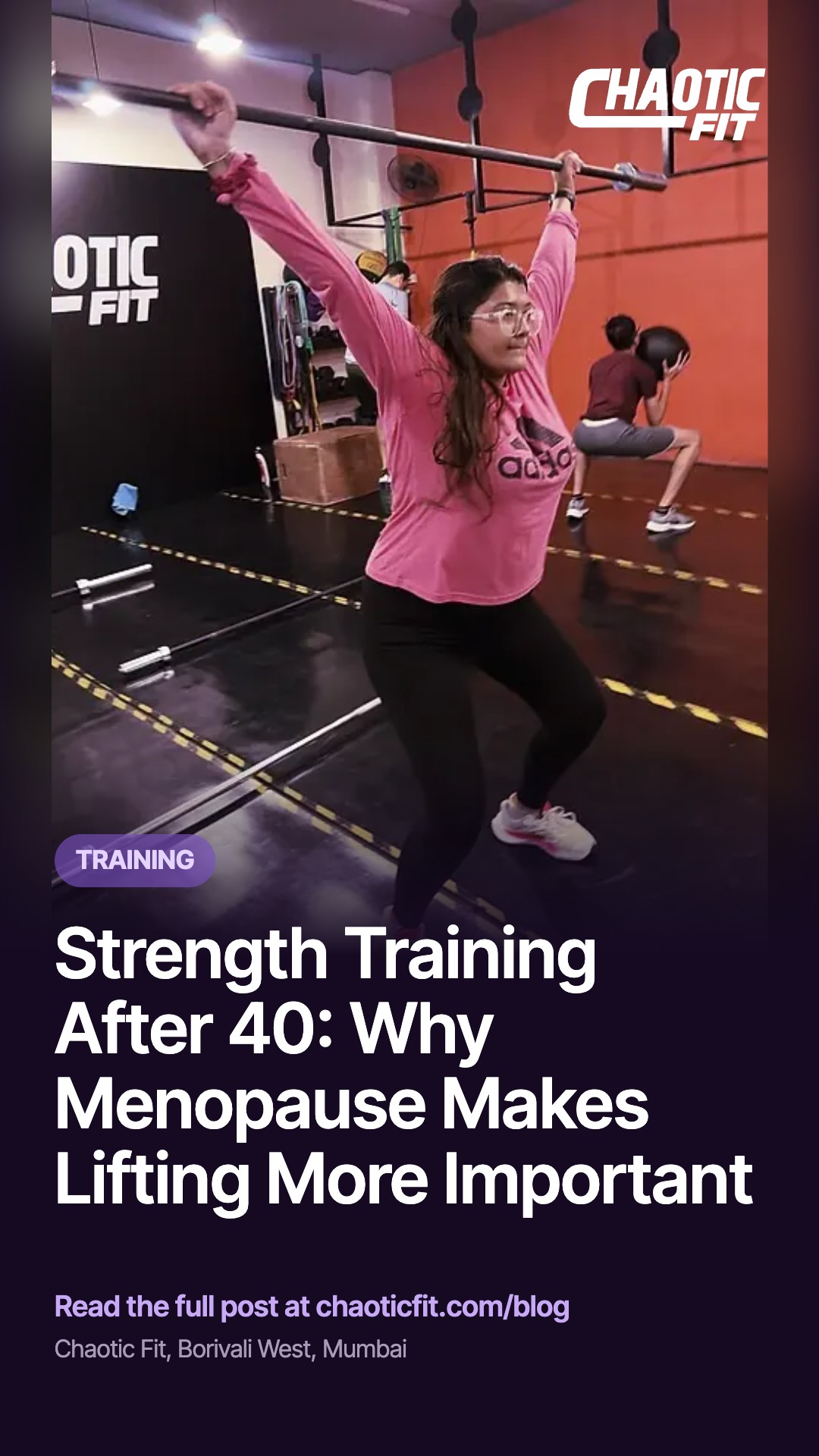
Yes, lift. Muscle and bone both decline faster after menopause, and strength training is one of the best tools to slow that. Start with two sessions a week of simple, well-coached lifts, add weight slowly and eat enough protein. Check with your doctor first if you have osteoporosis, heart disease or joint problems. This is general coaching information, not medical advice.

Why does lifting matter more after 40?
From your thirties, you slowly lose muscle. One university health system estimates about 3 to 8 percent per decade between 30 and 50, and 5 to 10 percent per decade after 50. Estimates vary by source. Bone loss also speeds up around menopause, when oestrogen drops. Less muscle and weaker bones make falls and fractures more likely. Strength training helps you keep both.
What does strength training do for bones?
Bone responds to load. Trials in postmenopausal women show that progressive resistance training can improve or preserve bone density, especially in women who were previously inactive. One well-known study, LIFTMOR, used supervised, heavy lifting twice a week for eight months and saw gains in spine bone density in women with low bone mass. That programme was carefully supervised, so do not copy it alone. If you have osteoporosis or osteopenia, ask your doctor and work with a coach.
Does it help with menopause symptoms?
Some research suggests strength training can improve sleep, mood and body composition during menopause. Evidence on hot flushes is less clear, so do not expect it to remove symptoms. Expect to feel stronger and more capable. Talk to your doctor about symptoms that affect your life.
How do you start?
- Get cleared. See your doctor if you have a heart condition, osteoporosis, joint pain or are unsure.
- Two full-body sessions a week. Squat or sit-to-stand, hinge, push, pull and carry.
- Start light and learn the form. Add a little weight every week or two. See our progressive overload guide.
- Add balance and mobility. Try mobility work and interval walking.
Try it
Ready to start?
Tick what is true for you.
How much protein do you need?
Protein helps you keep and build muscle. Dietitians often suggest around 1.2 to 1.6 g per kg of bodyweight a day in midlife, sometimes more if you train hard. Vegetarian sources include paneer, curd, dal, tofu, soya and milk. Our protein guide has a calculator. If you take medicine or have kidney issues, ask your doctor first. Creatine is also being studied in midlife. Read creatine for women.
Is it too late to start?
No. Studies show people in their seventies and eighties can build strength. Starting later just means starting smaller. Our personal training works around your joints, schedule and doctor.
Quick answers
Is strength training good during menopause?
Yes. It helps preserve muscle and bone, which decline faster around and after menopause. Check with your doctor first if you have bone, heart or joint conditions.
How often should women over 40 lift weights?
Two full-body sessions a week is a good start. Add a third once the first two feel comfortable.
How much protein do women over 40 need?
Dietitians often suggest about 1.2 to 1.6 g per kg of bodyweight a day, sometimes more with heavy training. Ask your doctor if you have kidney disease.